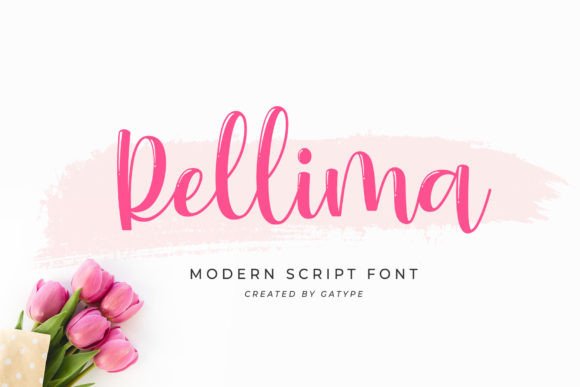
Rellima: A Script Typeface Built for Digital Design
As a designer working primarily on screen, the search for fonts that perform is constant. We need typography that scales, that retains its personality on a mobile device, and that supports the goals of the project—whether that’s building trust, driving a conversion, or simply making content effortlessly readable. In the world of script and display fonts, this is a particular challenge. Many are beautiful but fragile, losing their charm when tasked with real digital work. Rellima, however, is a modern, dynamic calligraphy manuscript designed with these pressures in mind.
The Digital Personality of Rellima
Rellima is not a delicate historical script. Its strokes are confident, its forms are clear, and its rhythm is built for the grid. The calligraphy influence gives it warmth and a human touch, essential for brands wanting to feel approachable and authentic online. Yet its modern construction means those beautiful strokes remain legible even at smaller sizes or on lower-resolution screens. This blend makes Rellima a versatile asset. It carries the elegance suitable for a wedding invitation site or a luxury boutique, but also the strength needed for a bold hero title on a SaaS landing page.
In practice, this means Rellima can set a brand tone immediately. Used in a logo or as the primary headline font, it signals creativity, craftsmanship, and attention to detail. For a digital product creator or a coach, this font can become the visual anchor of their entire online presence, from their website to their course sales pages.
Practical Applications in Web Layouts
Understanding where a font shines is key to deploying it effectively. Rellima is fundamentally a display font. Its power is in creating focal points and establishing hierarchy.
Hero Sections and Landing Page Headlines
This is Rellima's primary stage. A short, impactful phrase like “Transform Your Craft” or “Welcome Home” rendered in Rellima immediately draws the eye and sets an emotional tone. Its dynamic strokes create movement even in static layouts, guiding the user’s scanning behavior toward your key message and, subsequently, your call-to-action button.
Brand Anchors: Logos, Navigation, and Key Graphics
For a logo used online, especially in header navigation, clarity is paramount. Rellima's well-defined letterforms ensure the brand name remains recognizable even in a constrained space. Similarly, using it for the title on a blog graphic or a featured section on an online store banner reinforces brand identity consistently across touchpoints.
Accents and Short Phrases
Beyond major headlines, Rellima excels as a supporting typography element. Consider using it for decorative accents like pulling out a key statistic on a sales page, styling the labels on a premium product’s features list, or giving a special offer banner a handwritten, personal feel. It’s ideal for short phrases where its personality can be fully appreciated without demanding lengthy reading.
Readability and Responsive Considerations
Any script font requires careful handling for digital readability. With Rellima, follow these practical guidelines:
- Size and Contrast: On desktop, use Rellima at a size that allows its stroke details to be clear. On mobile, increase the size proportionally more than you might for a sans-serif. Ensure high contrast against backgrounds—dark Rellima on a light background or vice versa. Avoid placing it over busy image overlays without a solid color backdrop or significant padding.
- Spacing and Line Length: Give Rellima room. Ample letter-spacing can actually enhance its calligraphic feel in digital contexts. Never use it for long body paragraphs or multi-line blocks; its role is for brief, impactful text.
- Button Text: It can work on a primary CTA button for a brand where personality is central, like a creative studio. Ensure the button is large enough, and consider using a slightly heavier weight if available to boost legibility at a small scale.
Building a Cohesive System with Font Pairing
A display font like Rellima needs a strong, silent partner for body copy and UI text. The pairing strategy defines your entire digital editorial design.
- For a Clean, Modern Digital Identity: Pair Rellima with a geometric or neutral sans-serif font. This is a classic web design approach: the script provides the brand voice and focal point, while the sans-serif ensures effortless reading of articles, product descriptions, and interface labels.
- For an Editorial or Sophisticated Tone: If your website leans towards luxury, publishing, or deep content, pair Rellima with a contrasting serif font for body copy. This combination leans into traditional craft while maintaining clear hierarchy.
The rule is simplicity: let Rellima sing in headlines and accents, and choose a highly readable, unobtrusive font for everything else. This creates a visual rhythm where users know what to feel and what to read.
Technical and Licensing Notes for Digital Use
Before integrating any font into a web project, check its technical specs. For Rellima, confirm the included file formats and webfont availability. As a modern typeface, it should offer standard formats like WOFF2 for efficient web performance. Investigate if it includes alternate characters or multiple weights, which add flexibility for different contexts.
Licensing is critical. Ensure you possess the correct commercial font license for its intended use. For a website, a standard web license covering the domain is required. For client projects where the font will be embedded in a site you build, you need a license that permits redistribution in that manner. For digital templates, product screens, or brand asset kits you sell, an appropriate extended license is necessary. Always verify the license covers the scope of your project to protect your work and your client's.
Ultimately, Rellima is more than a beautiful script. It’s a design asset built with an understanding of the digital canvas. It supports visual hierarchy, enhances brand tone without sacrificing usability, and provides the creative texture that makes online experiences memorable. For the web designer focused on results, it’s a tool that balances art with function.